
Monobloc Tube vs. Standard CV Axles: What Actually Matters
When replacing a CV axle, the conversation often defaults to price and availability. What’s often overlooked is how the axle is built—and how that construction directly impacts performance, durability, and overall vehicle refinement.
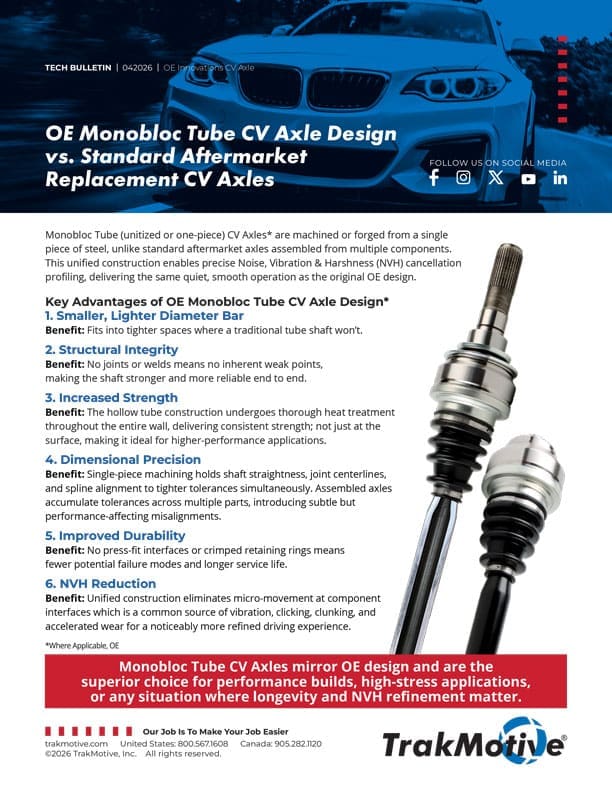
Monobloc tube CV axles represent a different approach than traditional aftermarket designs. Instead of assembling multiple components, they are machined or forged from a single piece of steel. That distinction alone changes how the axle behaves under load, how long it lasts, and how it feels on the road.
The Core Difference: One Piece vs. Many
Standard aftermarket CV axles are built from multiple parts joined together. Each connection point introduces potential variation—tolerance stacking, minor misalignment, and micro-movement under stress.
Monobloc tube axles eliminate those variables.
By using a single-piece construction, they maintain consistent geometry and structural integrity from end to end. This directly affects strength, balance, and long-term reliability.
NVH: The Difference You Actually Feel
Noise, vibration, and harshness (NVH) is where the design gap becomes most noticeable.
Standard axles can develop vibration, clicking, or clunking due to micro-movement at connection points. Monobloc construction removes those interfaces entirely, allowing for more precise NVH tuning and a smoother, quieter ride—closer to original OE performance.
The Practical Takeaway
Not all CV axles are built the same. Construction method directly influences performance, durability, and customer satisfaction after installation.
Monobloc tube CV axles mirror OE design more closely, offering a stronger, more precise, and more refined solution compared to traditional multi-piece aftermarket alternatives.
For installers and buyers focused on long-term results—not just immediate replacement—this distinction matters.